Role
Lead designer
Team
2 designers
1 content designer
1 project manager
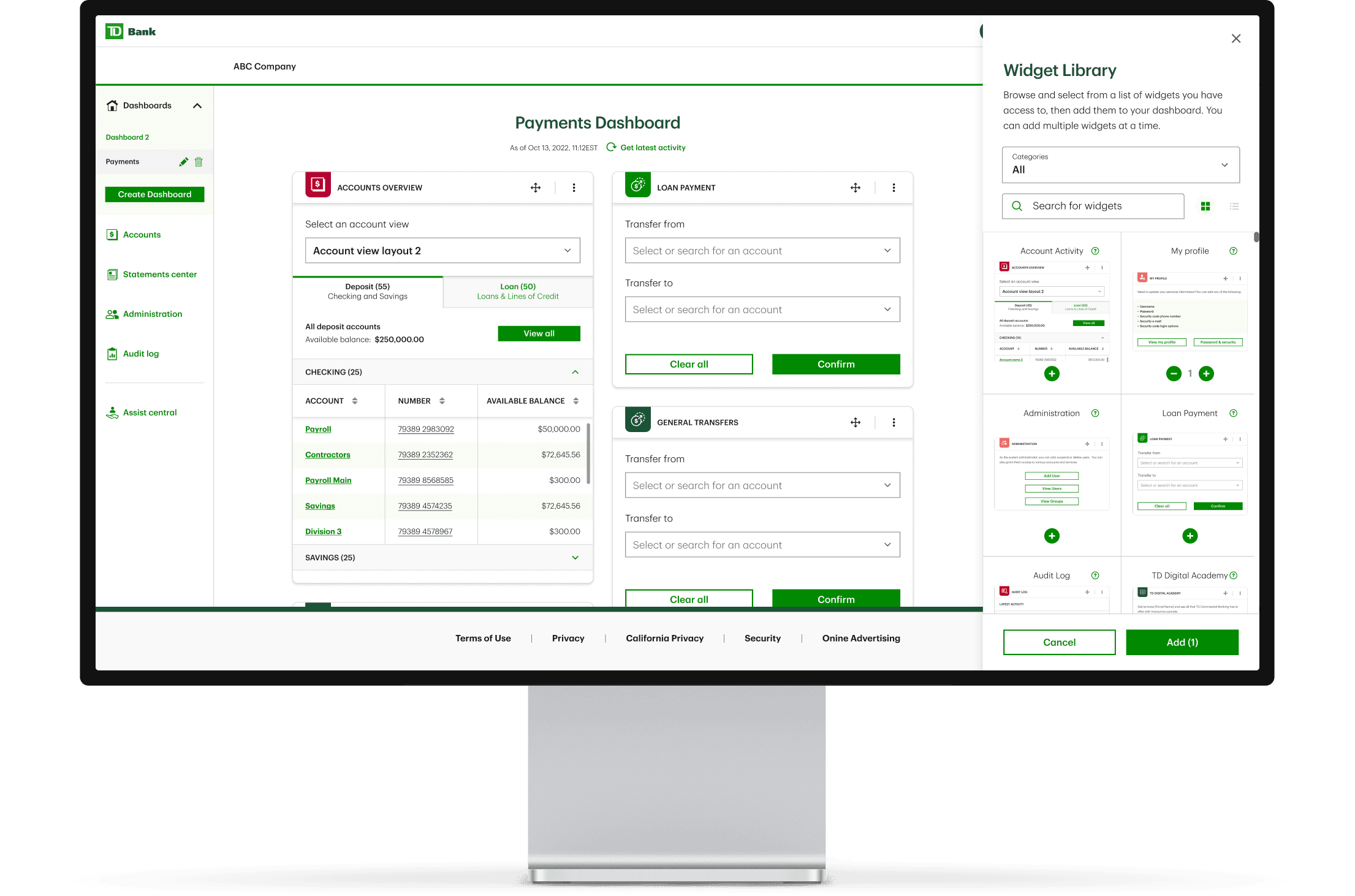
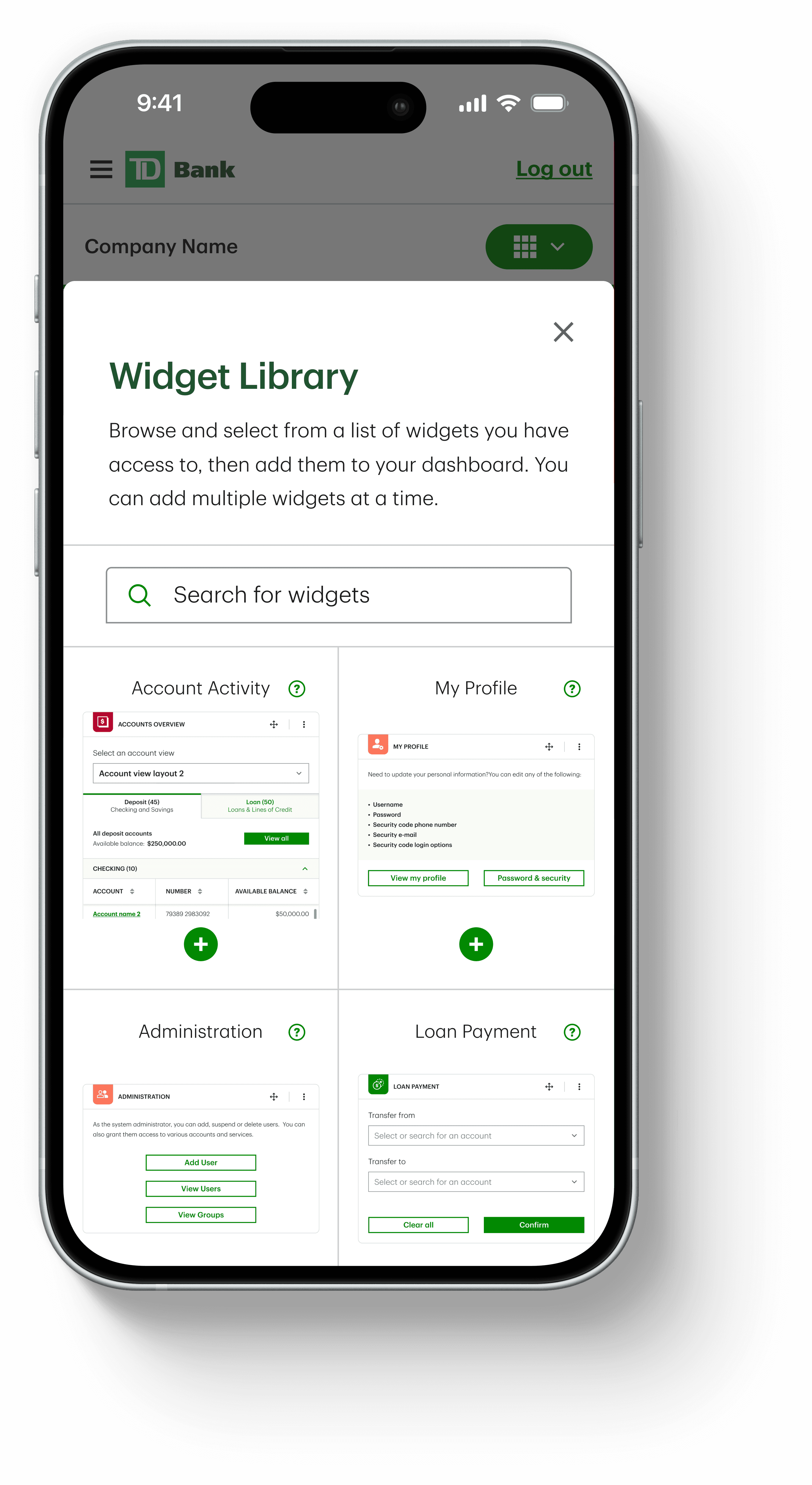
Most dashboards act as simple “launchpads”, forcing users to leave the page to get real work done. In a team of three, we redefined our fragmented dashboard as a unified command centre for our commercial clients. Together, we came up with a detailed prototype for a “North Star” to replace the current static interface with a personalized ecosystem.
Leading a team (two designers and a content designer), I navigated the intersection of business strategy, technical feasibility, and user needs. My role was to provide the "North Star", ensuring every widget and interaction felt like a cohesive part of a premium banking experience.
By providing a prototype, we convinced our stakeholders that the vision state could be attainable in 1 year rather than the expected 3-4 year timeline. We handed over the strategic roadmap for what could potentially be our portal’s most valuable feature.
Endless possibilites
We drew inspiration from modular ecosystems like
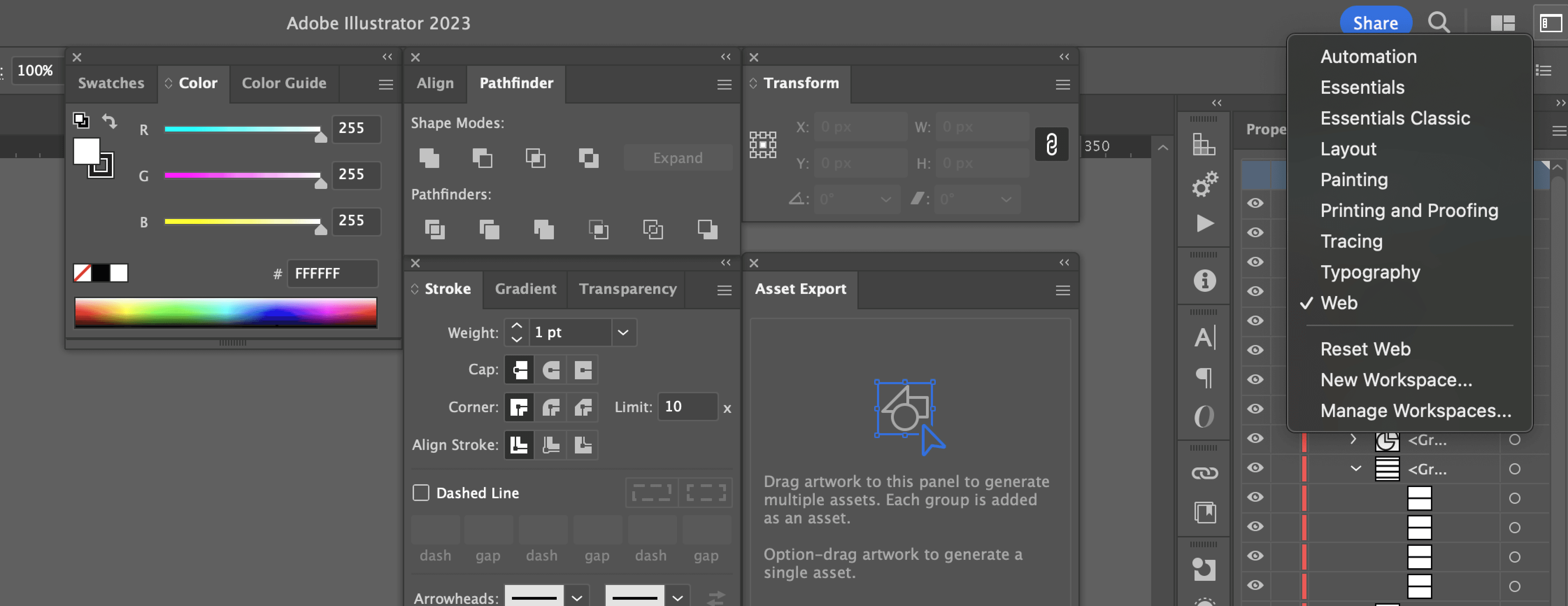
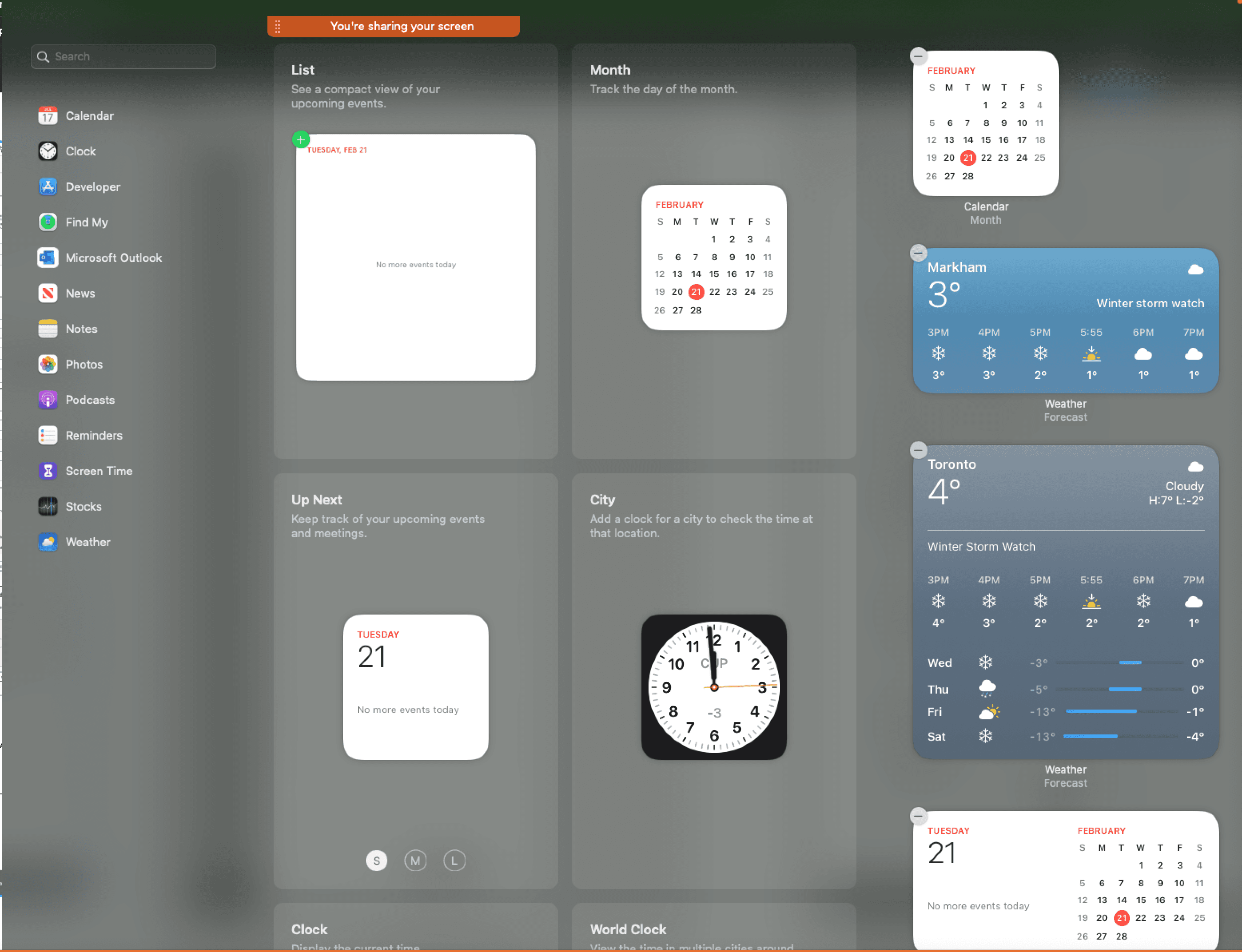
We explored how to give users "unlimited" control over their dashboards. We looked at allowing users to change the colours or group widgets together. We quickly realized none of these features got us closer to our goal of improving the dashboard’s utility.
When it clicked
Our research revealed that users perform highly repetitive routines, such as managing specific contractor payrolls or recurring reports on the same day of the month.
This led to our core innovation:
Dashboards personalization and custom widgets.
We prototyped a way where users could hide irrelevant fields and pre-fill fields within widgets, creating their own dashboards into a curated workspace for their exact routine.
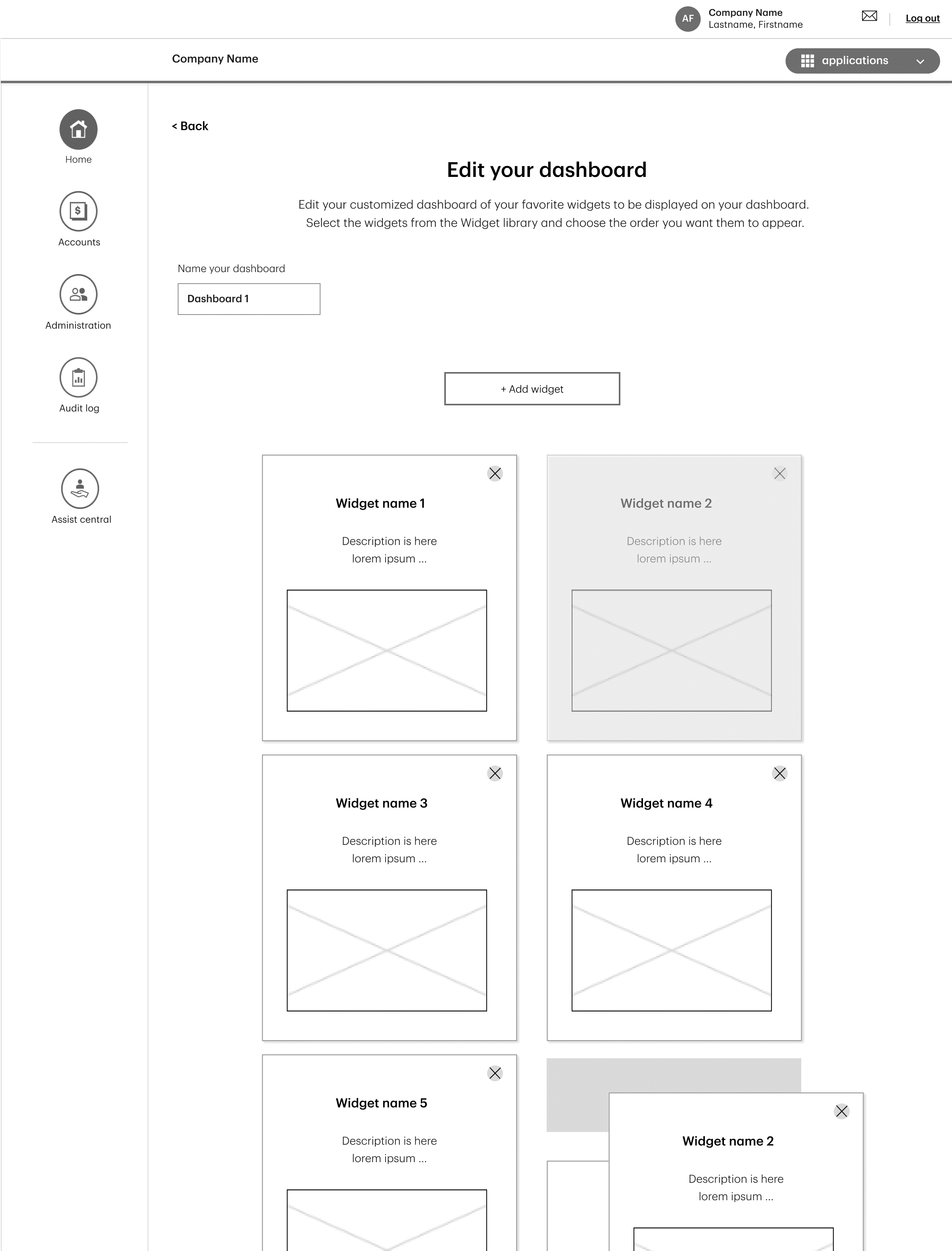
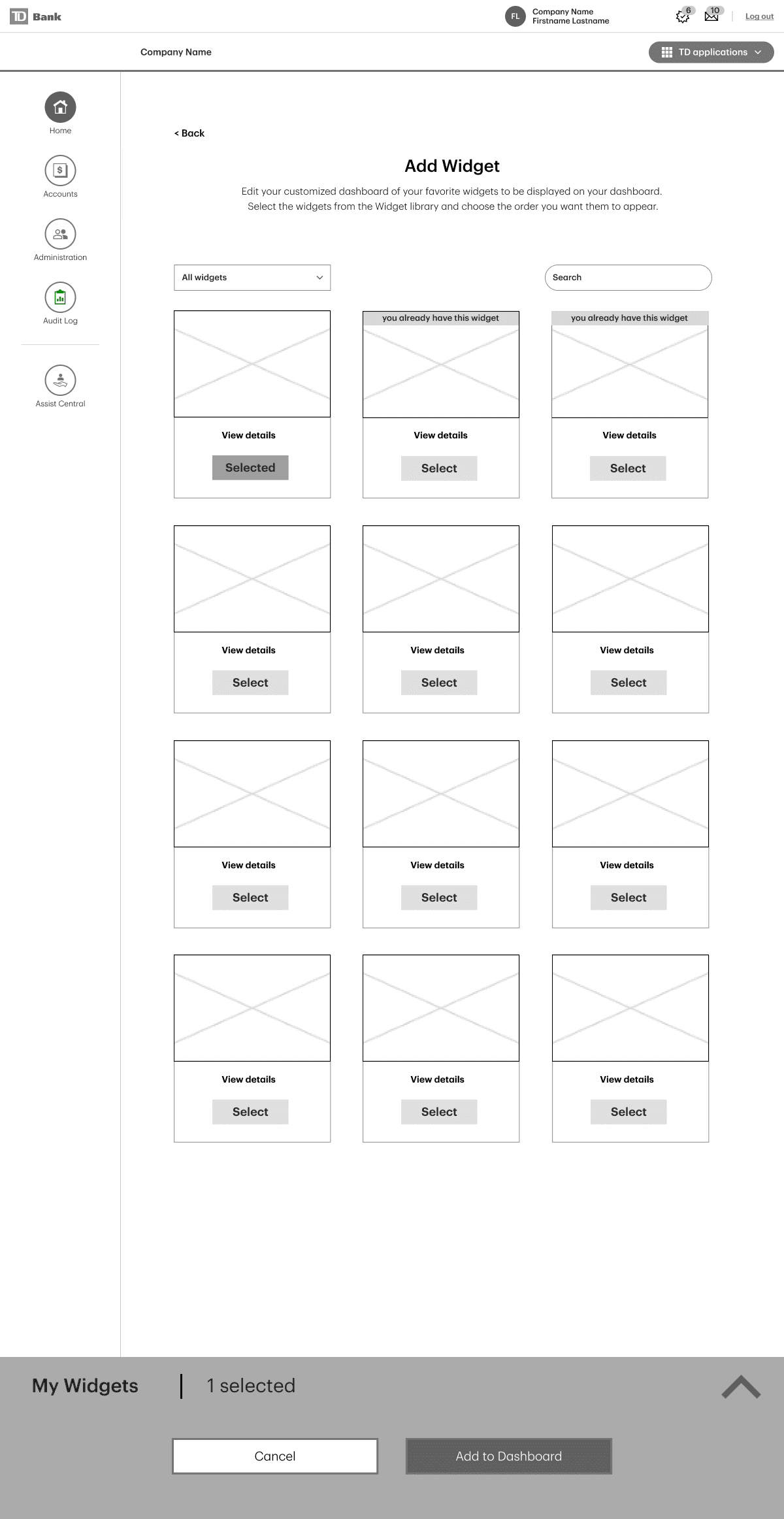
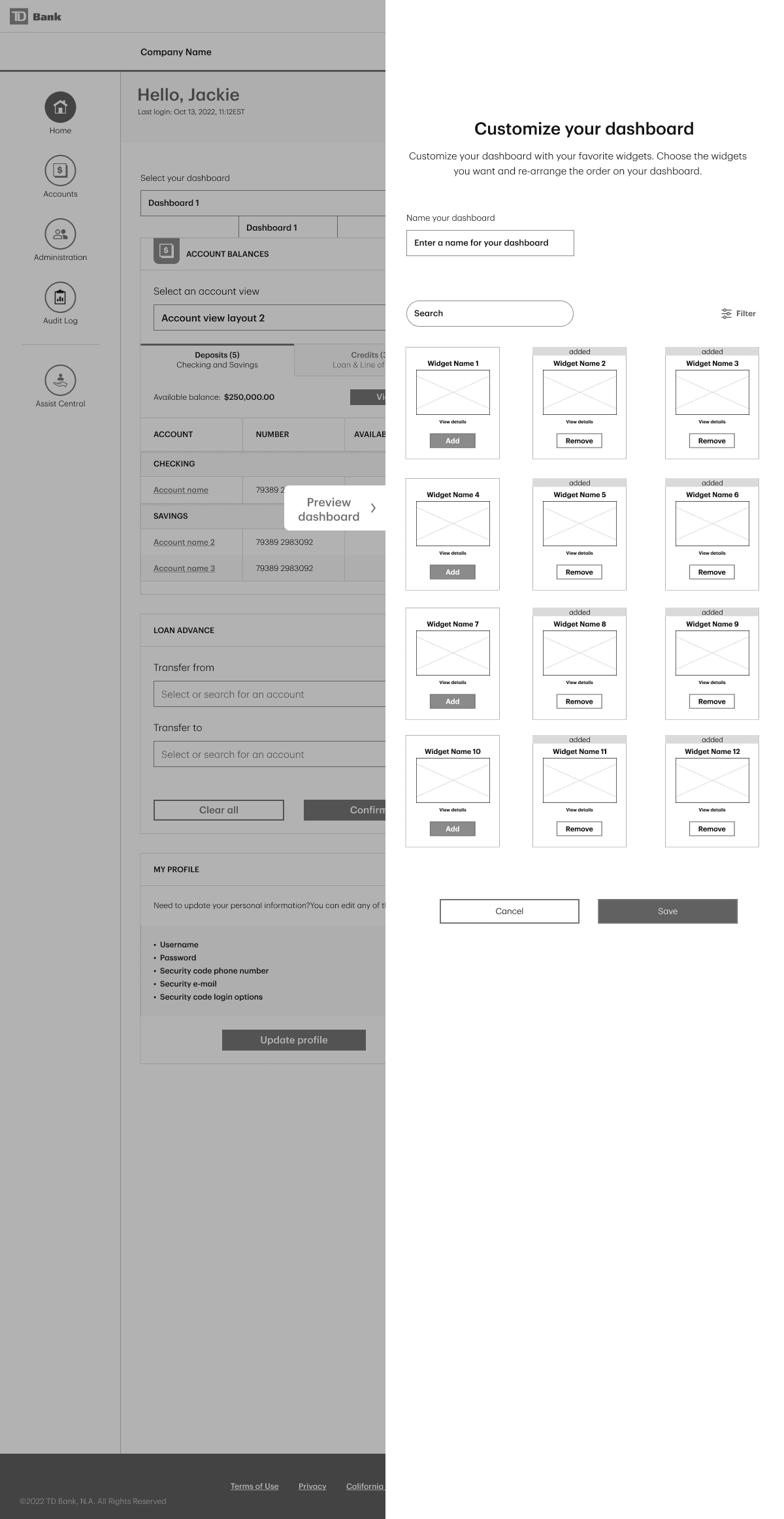
A critical moment in our design process involved the customization experience. While an entire page offered more room, we feared it would disorient users and break their flow. Leveraging a new component from our design system, I advocated for a Side Panel approach. This allowed users to browse, add, and customize their dashboard widgets while maintaining their visual context.
Full page approach
Side Panel approach
Feasibility by Design
A vision is only as powerful as its path to production. Rather than creating unattainable "pie-in-the-sky" concepts, I grounded our designs in the technical reality of our design system. By leveraging my deep understanding of front-end development and accessibility, I built an experience that immediately felt familiar to our engineers.
The vision was presented to executive leadership and received overwhelming support, accelerating the trajectory towards dashboard personalization and focusing more resources towards developing our design system and component library. While the project was forward-looking, it provided immediate ROI by establishing a componentization framework that sped up both design and development cycles. Our vision work showed everyone what was realistically attainable and now serves as a blueprint for our product roadmap.